

8 Best LMS in Canada in 2026: What I Found
My review of eight LMS platforms for Canadian teams: learning workflows, English and French delivery, regional hosting options and costs.

The best LMS in Canada in 2026 include Absorb, D2L Brightspace, Coursebox, Docebo, SkyPrep, iSpring LMS, TalentLMS and Moodle. Compare the learning programme, languages, processing agreement and total cost.
- Absorb, D2L and SkyPrep have Canadian origins. Docebo was founded in Italy and has Canadian headquarters and a Canadian region option. Company origin does not establish where all processing happens.
- PIPEDA does not impose a blanket Canada-only hosting rule. Confirm the actual requirements, including any public-sector or provincial rules, and agree storage, backups, support and subprocessor scope.
- Coursebox combines AI course creation, assessment, tutor support and delivery with unlimited learners. It has no published Canadian region; include it only where the organisation’s requirements allow the available deployment.
- Test the learner interface, authored content, assessments and support in the languages your team needs. Regional hosting and bilingual learning are separate buying questions.
Compare four starting points from the eight tools below. Choose the main job first; the later questions refine your rollout preferences.

Run your own branded LMS with unlimited learners
An LMS for a Canadian team needs to fit the learning programme as well as the hosting agreement. I compared eight platforms for course creation, delivery, administration, English and French learning, support and cost. Where a Canadian hosting region is required, the deployment and processing terms need to make that explicit.
I’m Parshad. In this review, I tested each platform’s fit for a Canadian buying decision, including the training workflow, published pricing and the limits of its residency claims. Canadian headquarters are useful context; they are not a substitute for the service agreement.
I work at Coursebox, which is Australian and appears in this comparison. Its AI LMS covers course creation, assessment, tutor support and delivery. It has no published Canadian hosting region, so I would assess it against the actual hosting requirements of the programme.
How I picked the best LMS platforms in Canada
A "best LMS" means nothing without a Canadian buyer, so I judged these on what actually decides a local purchase:
- Learning programme: Course creation or import, assignments, assessment, manager access and records, alongside the region you need.
- Data residency: Where your learner data is hosted, because PIPEDA makes personal data your responsibility wherever it is processed.
- Local and French support: Canadian support hours, and bilingual English-French where your team needs it.
- Pricing honesty: Whether pricing is public or quote-only, because the Canadian-built leaders all hide their numbers.
Canadian headquarters, hosting and processing are separate checks. PIPEDA does not impose a blanket Canada-only rule, and public-sector or provincial requirements can differ. Match the contracted region, backups, support access and subprocessors to the rules that apply to your organisation.
The best LMS platforms in Canada compared
| Tool | Canadian angle | Best for | Starting price |
|---|---|---|---|
| Absorb LMS | Calgary origin; contracted region | Capable corporate LMS + residency | Quote-only |
| D2L Brightspace | Waterloo origin; Canadian hosting available | Regulated / public sector / higher-ed | Quote-only |
| Coursebox | Australian; no published Canadian region | AI creation, assessment, tutor and delivery | Free; branded Pro LMS from US$3,000/year |
| Docebo | Italian origin; Canadian headquarters and region option | Large enterprise + residency | Quote-only |
| SkyPrep | Toronto origin; agree deployment region | Simple Canadian-based LMS for SMBs | Quote-only |
| iSpring LMS | No verified Canadian region in this review | PowerPoint authoring + public pricing | US$8,286/year at 100 users; authoring separate |
| TalentLMS | No verified Canadian region in this review | Simple, cheap start | Free; from US$119/mo |
| Moodle | Host in the selected region | Budget / technical / CA self-hosting | Free (self-host) |
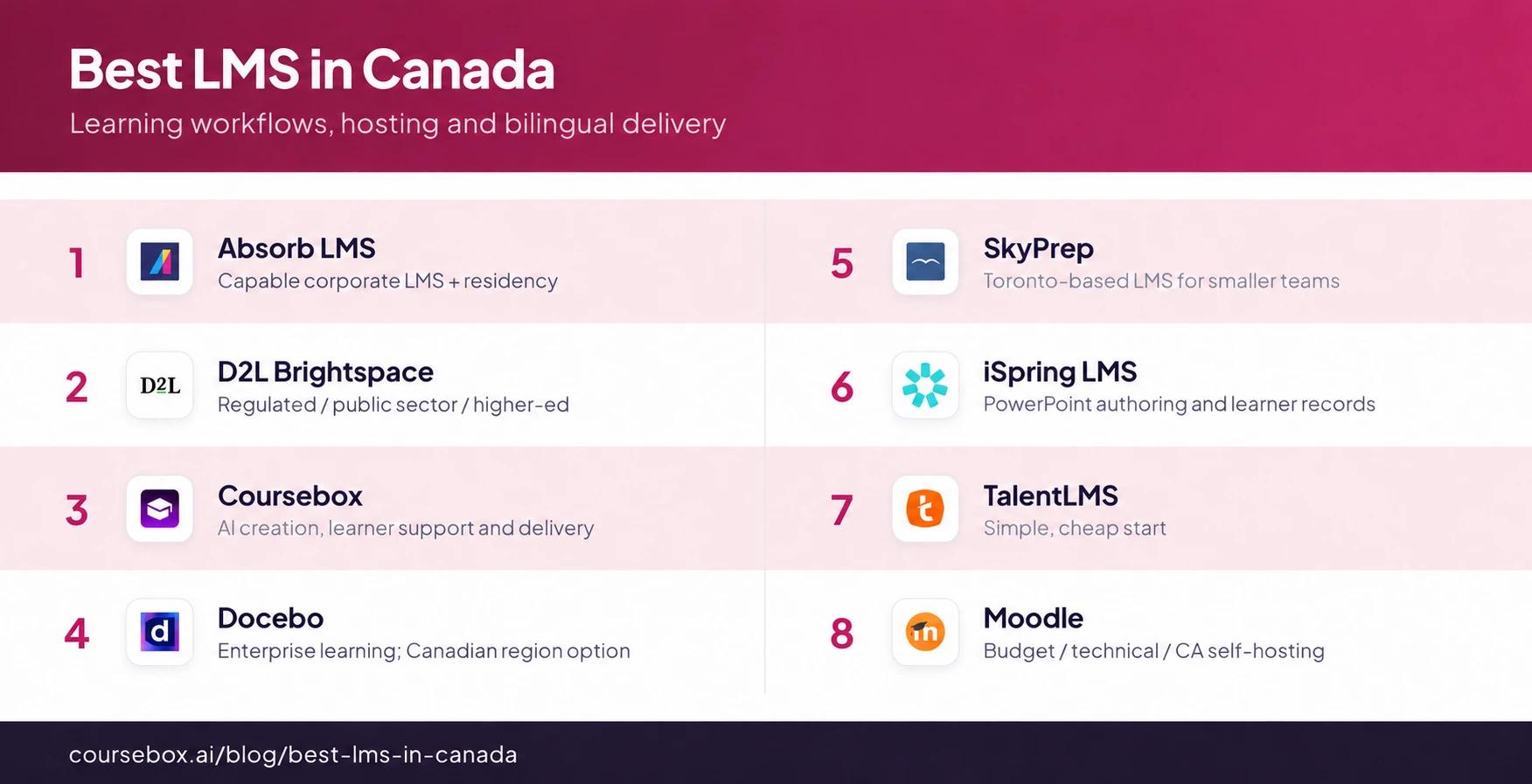
The 8 best LMS platforms in Canada
1. Absorb LMS
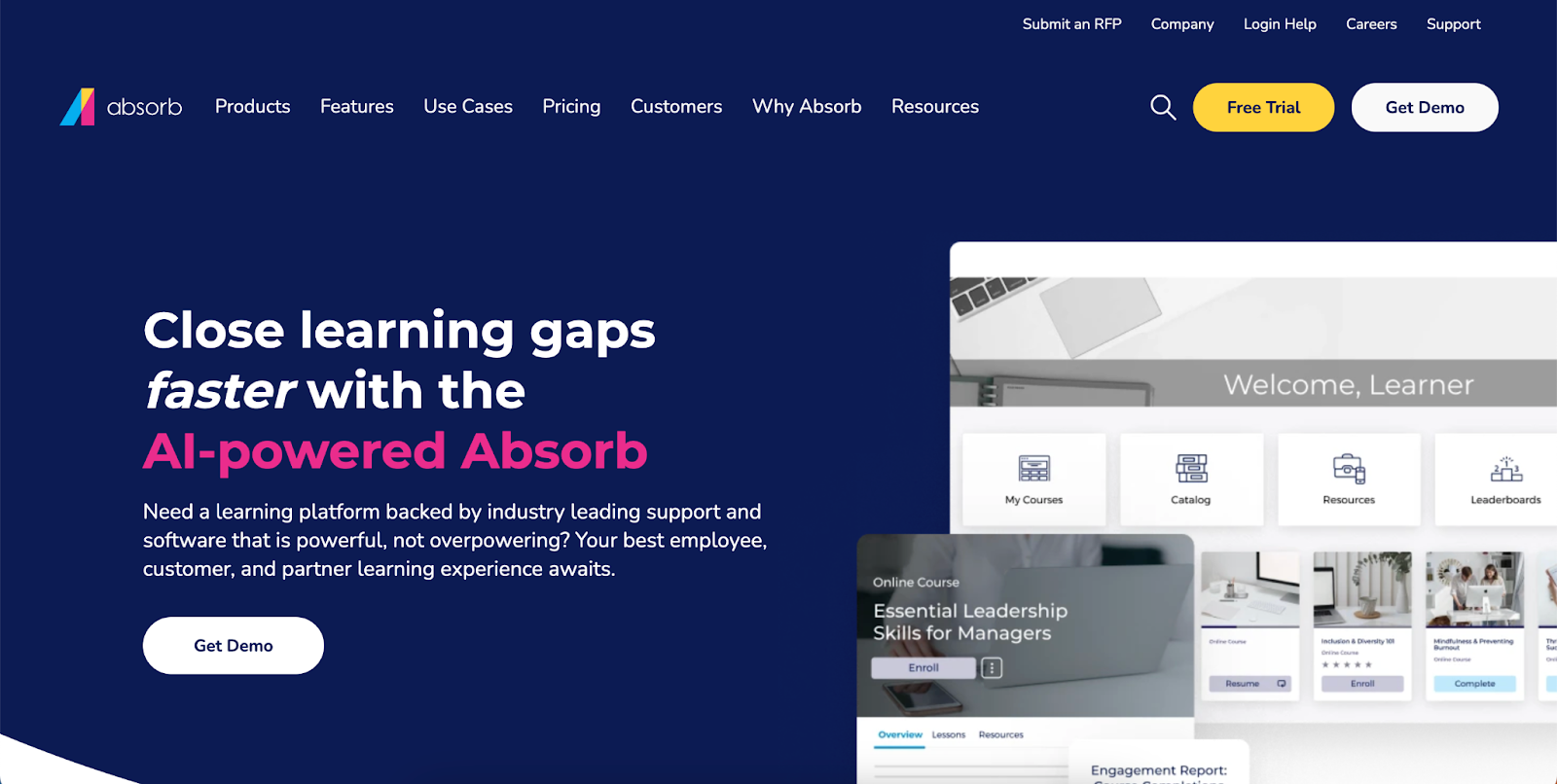
Absorb LMS is Canadian-built (Calgary) and the one I would put near the top of a Canadian list, because it pairs a capable corporate LMS with data hosted in Canada.
Absorb provides course delivery, learner organisation, enrolment rules and reporting. Its subprocessor information lists client-selected hosting regions. For a Canadian deployment, agree the portal’s region and review any connected services and processing locations; do not assume all data stays in Canada solely because the company is based in Calgary.
What stood out: I would shortlist Absorb when the programme needs corporate learning administration and a contracted regional deployment. The quote should include the integrations and administration model, so residency does not crowd out how the team will actually run training.
The day-to-day buying question is how the training team will assign material, organise learners and follow up progress, not just where the server sits. Absorb’s integration API covers learner, course, department and grade data and requires a subscription to that service. I would price the people-data connection alongside the LMS when employee records need to stay aligned. Its regional hosting option also needs to be agreed for your own portal; company headquarters alone do not settle residency.
What it costs: Quote-only, via a lead form by learner count; Absorb publishes no public numbers, so you negotiate against your headcount.
2. D2L Brightspace
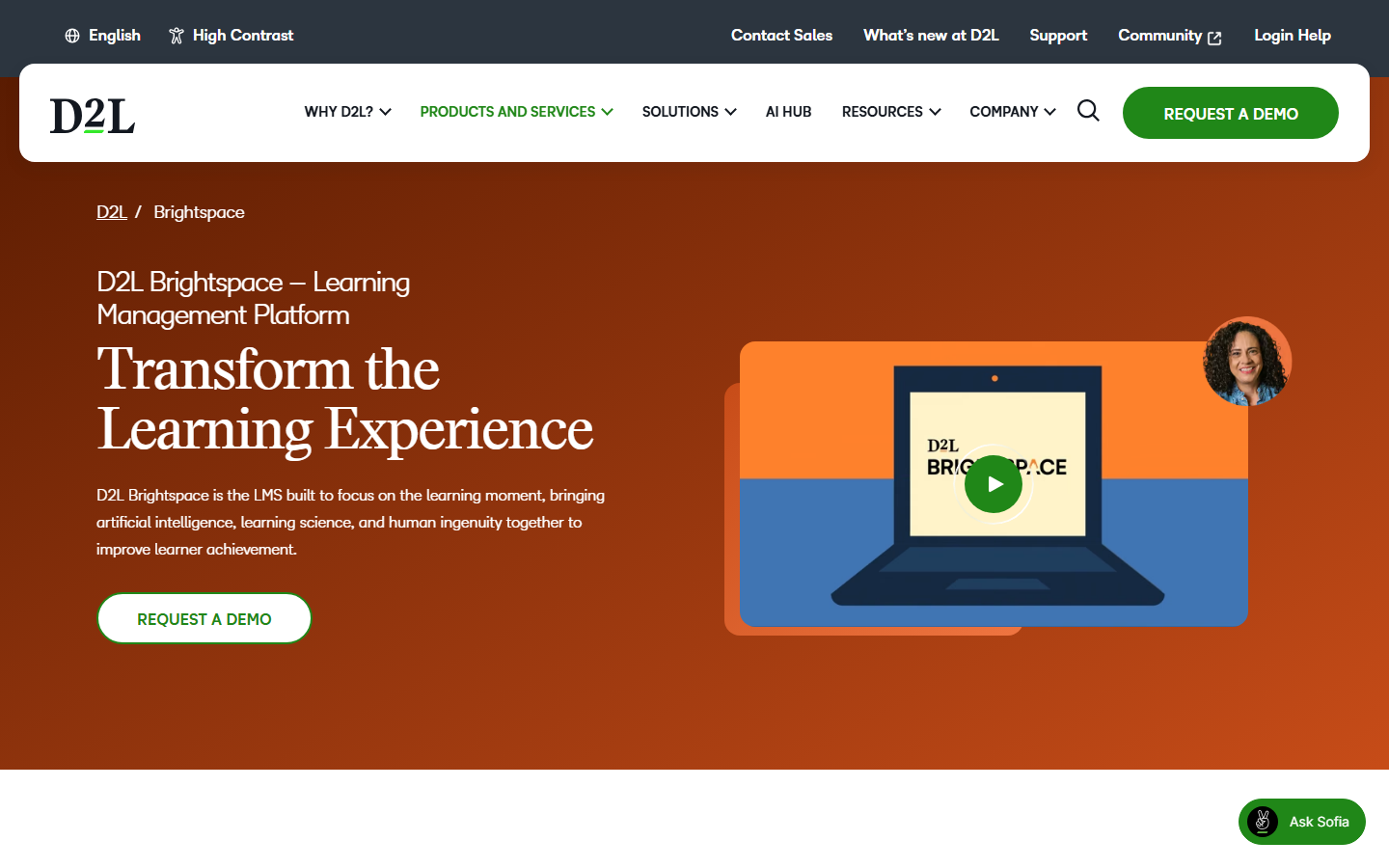
D2L Brightspace is a Waterloo-based learning platform used across education and corporate learning. A Canadian hosting option makes it relevant to buyers with a regional requirement, alongside its content, assessment and learning-programme controls.
D2L describes Canadian hosting in applicable arrangements, while its current subprocessor list includes processing in other countries. Review the selected services and agreement rather than turn one regional deployment into a blanket Canada-only promise.
My read: I would compare Brightspace when structured learning, assessments and bilingual delivery are central to the programme. For a Canada-only requirement, include storage, backups, support and connected processing in the approved scope.
Brightspace supports a structured learning programme with content, assessment and learner progress; Lumi adds AI capabilities whose entitlement should be included in the quote. For a bilingual rollout, I would review both the learner interface and a complete French course, including its assessment and feedback. D2L’s subprocessor list includes processing in several countries, so a Canadian region is only one part of the residency decision. The contracted services, integrations and support access need to match your requirements.
What it costs: Quote-only, built from FTE or volume plus add-ons; no list prices.
3. Coursebox
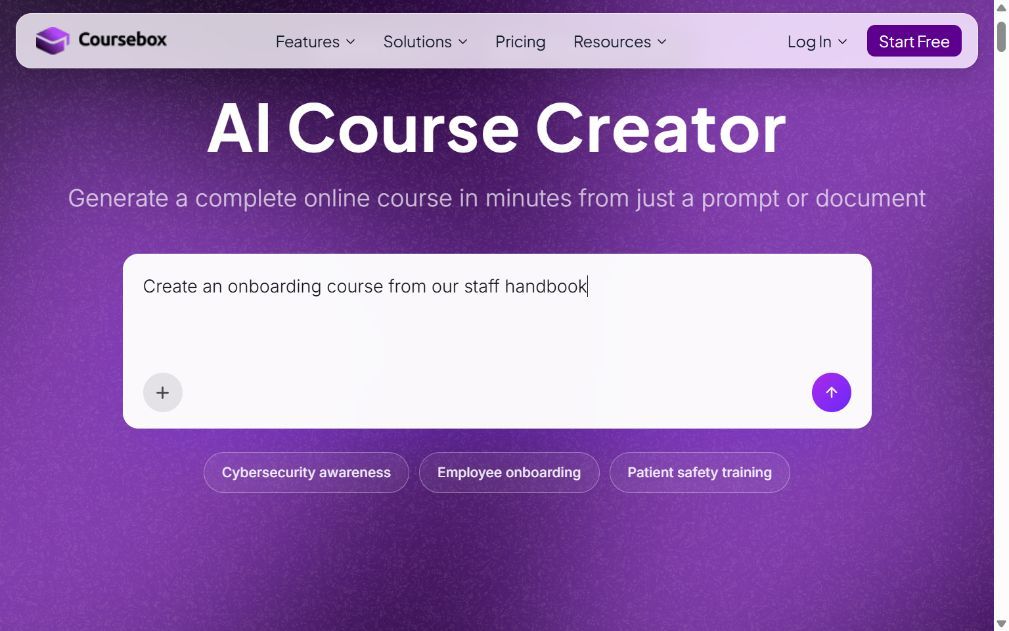
Coursebox is Australian and combines AI course creation with assessment, tutor support and training delivery. It has no published Canadian hosting region, so its fit depends on the organisation’s actual requirements.
Review the generated course, deliver it in Coursebox or export SCORM, and follow learner progress without per-learner charges. Where Canadian hosting is mandatory, the current published deployment does not establish that requirement; where it is optional, compare the complete learning workflow and processing agreement.
My read: I would shortlist it when the team needs to create and maintain courses and support learners in one programme. A published price and unlimited learners help with budgeting; neither removes a contractual hosting requirement.
The workflow continues after the first draft. A subject expert reviews the generated lessons and questions, learners work through the course with AI tutor support, and the administrator follows progress and assessment records. You can deliver in Coursebox or export a SCORM package to an existing LMS. That is useful when course production, learner support and delivery all need an owner; an AI draft still needs your subject expert’s approval.
Pricing and plans: Free to start with unlimited learners. A branded Pro LMS starts at US$3,000/year; Enterprise starts at US$30,000/year with a two-year minimum. AI credits, administrators and portal requirements affect the plan. Enterprise SAML for administrators is a US$3,000/year add-on; learner SSO is scoped separately.
4. Docebo
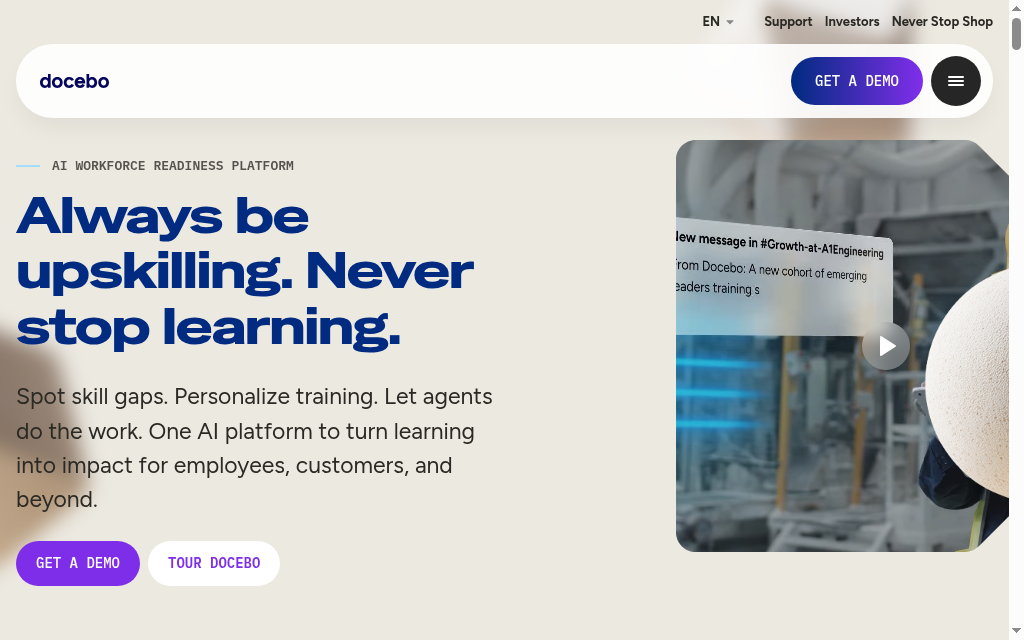
Docebo was founded in Italy and has Canadian headquarters. Its enterprise learning platform offers a Canadian AWS region option; it is not accurate to describe the company as founded or built in Toronto.
Its enterprise workflow supports audiences, learning programmes, administration and reporting. The selected region is documented in the agreement, and some components can process data elsewhere. Match that scope to both the learning programme and the organisation’s hosting requirements.
What stood out: I would compare Docebo for a programme with several audiences and delegated responsibilities. Scale alone is not a reason to reject it for a mid-sized team; the relevant test is whether the configuration and contract are proportionate to the work.
The enterprise workflow includes organising audiences, assigning learning and delegating administration. Those operations are useful when several departments share the platform but need different responsibilities. I would map employee-data updates and manager permissions before building the organisation structure. Docebo documents a Canadian AWS region, while its subprocessor information describes some processing outside the selected region. Price and review the actual services you enable, including analytics and AI, rather than rely on a Toronto address.
What it costs: Quote-only, with custom enterprise tiers on usage-based pricing; expect an enterprise contract.
5. SkyPrep
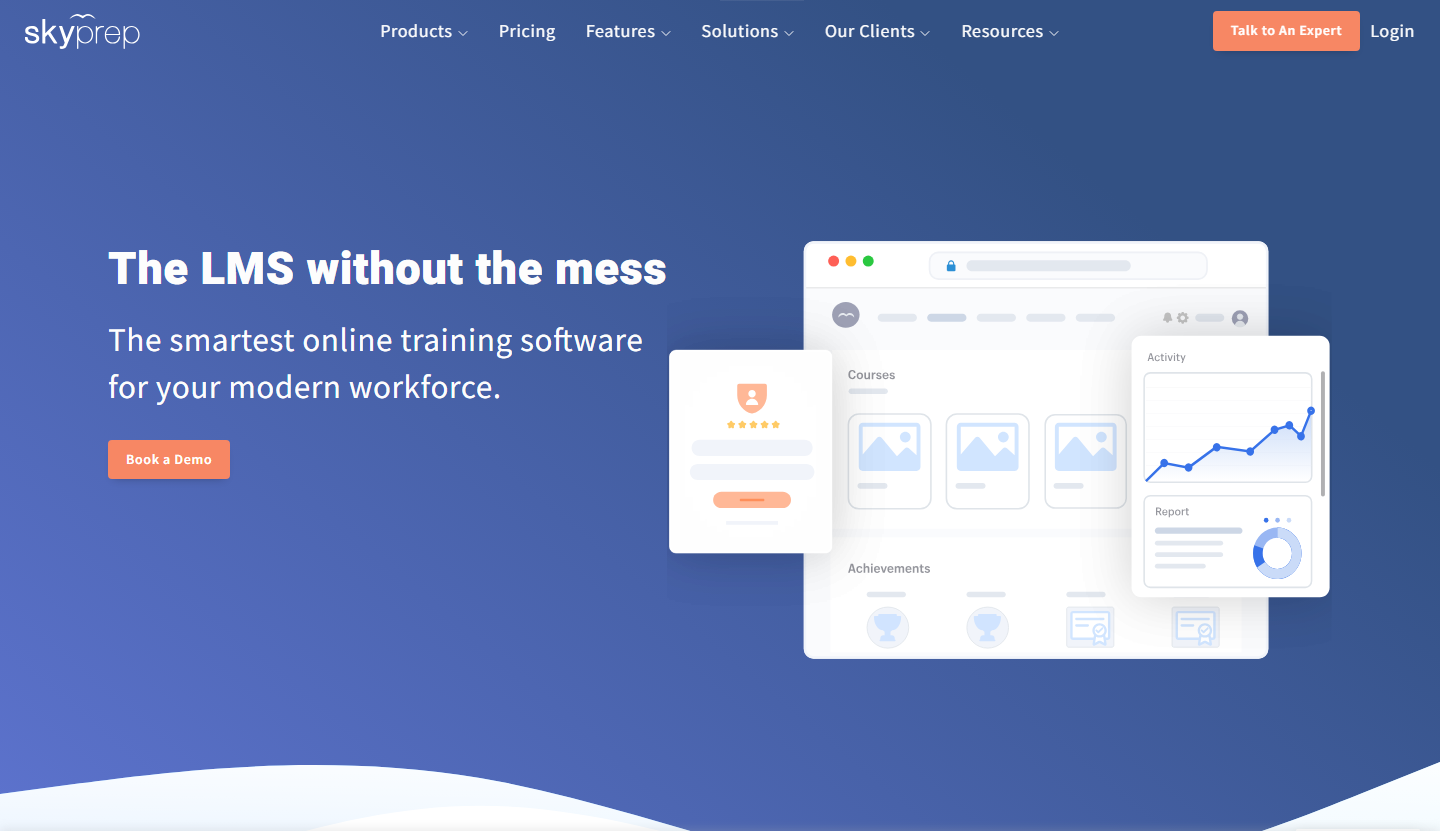
SkyPrep is a Toronto-based LMS for course delivery, learner administration and progress records. Its public pages do not establish that every customer’s data and processing stay exclusively in Canada.
Administrators can organise course access and use its API to connect learning data with other systems. For a residency-sensitive programme, the quote and processing terms need to identify the contracted region and any external processing.
My read: I would shortlist it for a team that wants a straightforward delivery and administration workflow. I would make a required hosting region part of the agreement, rather than choose on a review rating or a Toronto address.
SkyPrep is a Toronto-based LMS with a documented API for creating users, managing course access and retrieving data. That offers a practical route for joining the learning programme to existing systems, provided the relevant access is in your agreement. In my review, its attraction is the straightforward delivery and administration workflow. I could not establish a blanket Canada-only processing promise from the public pages, so I would make the contracted location an explicit condition where residency is required.
What it costs: Quote-only, across Lite, Premium and Enterprise tiers, with a 14-day trial.
6. iSpring LMS
iSpring LMS, formerly iSpring LMS, delivers assigned courses, assessment and progress reporting. Canadian buyers should verify the offered hosting location; the public material I inspected does not establish a Canadian region.
Its strength is the PowerPoint-to-course pipeline (iSpring Suite) feeding the LMS, with quizzes and completion reporting, and it publishes transparent per-user pricing. The residency gap is the trade for Canadian buyers.
What stood out: I would keep it on the shortlist when approved sales or policy slides are a useful starting point and the team wants per-user pricing. Include the separate authoring licence and the agreed hosting location.
The LMS and the authoring product are separate buying decisions. iSpring Suite converts PowerPoint material into courses and is licensed per author; iSpring LMS handles assignment, delivery and progress. The Windows and PowerPoint dependency applies to Suite, not to every way of creating or importing LMS content. I would keep this route when existing slides contain useful approved material, then budget for both the course producer and the learner platform.
Pricing and plans: The published US plan at 100 users is US$8,286/year (US$6.91 per user/month). Larger bands have lower unit rates. iSpring Suite is a separate author licence, published at US$970/year; compare the selected LMS and authoring configuration. Enterprise is quoted.
7. TalentLMS
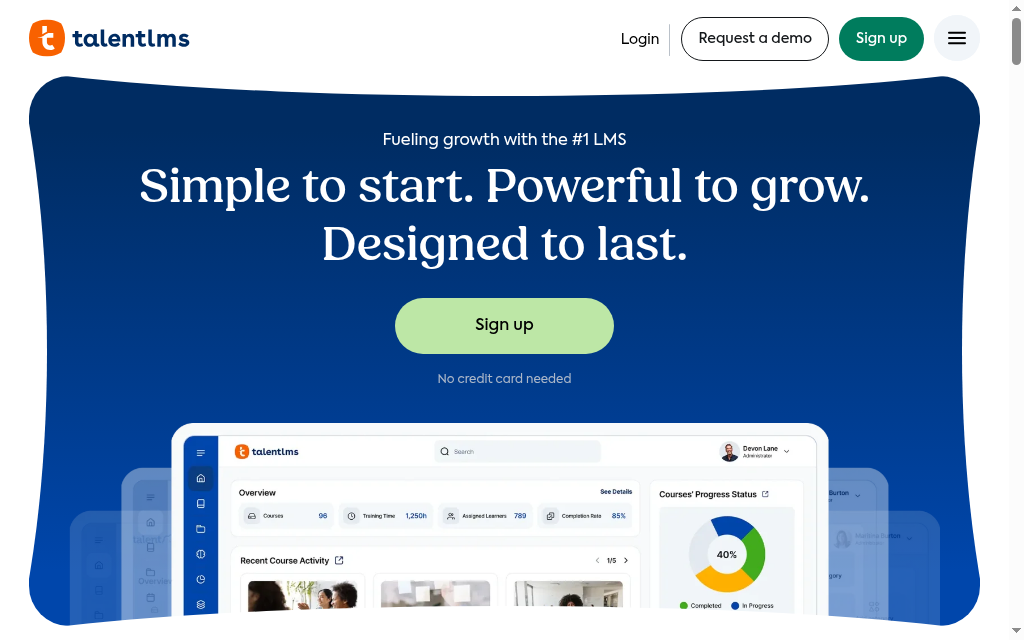
TalentLMS is the simple, cheap global option for a small Canadian team, included as the easy starting point, not a residency play.
TalentLMS provides course building or import, learner groups and progress records, with a free plan for a small initial programme. I could not verify a Canadian hosting region from the inspected public material; check the contracted data-processing scope when that is required.
My read: My preference is to try the course and administrator workflow before choosing a paid band. Its free plan helps that evaluation, but it does not answer a mandatory Canadian hosting requirement.
You can build courses, import supported packages, group learners and track their progress. For a sales rollout, I would organise product knowledge and process training into a repeatable path before adding specialist practice. TalentLMS also advertises a roleplay simulator through TalentLMS Labs, so the draft’s blanket claim that it has no roleplay is too broad. Check the availability and scope of that capability against the structured practice you need.
Pricing and plans: Free for up to five users. The published starting Core price is US$119/month for the 1-to-40-user band; higher bands and the billing period change the total. TalentLibrary content is an additional buying choice.
8. Moodle
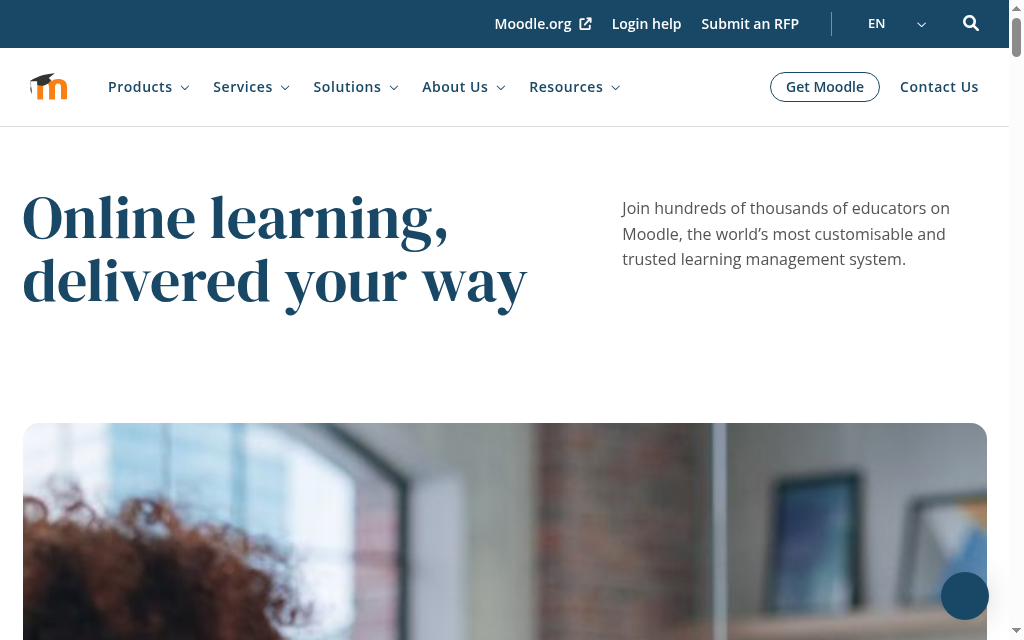
Moodle can be self-hosted on Canadian infrastructure or operated by a hosting partner. Choosing that location gives control over the deployment; privacy compliance also depends on the configuration, agreements and handling of personal data.
It is fully customisable with plugins for almost anything, and Canadian hosting partners offer in-country managed Moodle. The cost is technical: you, or a partner, run and maintain it.
What stood out: I would compare managed Canadian Moodle when deployment control is a buying requirement. Include maintenance, support, plugins and recovery in the annual cost, rather than treat free software as a free programme.
The hosting choice also determines who installs upgrades, maintains plugins, keeps backups and handles recovery. Moodle can organise courses, assessment and completion, while a partner can take responsibility for operating the installation. I would compare a managed Canadian deployment with the cost of the internal team that would otherwise run it. Free software is useful price information, but it is not a complete annual operating cost or proof of privacy compliance.
What it costs: Core Moodle is free to self-host; managed or Workplace is quote-only via a partner, and MoodleCloud has its own tiers (confirm current prices on moodlecloud.com).
Separate Canadian hosting from the learning experience
Canada’s privacy commissioner explains that PIPEDA does not prohibit cross-border processing. Accountability and appropriate protection still apply. Public-sector and provincial rules can differ, so the organisation’s actual requirements should set the hosting condition.
In the 2021 Census, 19.6% of Canadians had French as their mother tongue. I would review the learner interface, course content, assessment feedback and support arrangements separately; a translated interface alone does not supply a French training programme.
Statistics Canada also reported that 18.0% could converse in both English and French in 2021. Avoid assuming every learner can switch languages: test the whole assigned course in the languages your team needs.
| Check | What the agreement or demo should show |
|---|---|
| Hosting region | Primary storage, backups and recovery location |
| Processing | Support access, AI services and subprocessors |
| Languages | Interface, authored content, assessments and support |
| Learning operation | Assignments, manager permissions and usable records |
| Total cost | Currency, tax, authoring, integrations and implementation |
Which LMS in Canada should you choose?
Eight platforms, matched to what a Canadian buyer is actually solving for:
| If your priority is | Go with |
|---|---|
| Canadian data residency, non-negotiable | D2L Brightspace |
| A capable corporate LMS built in Canada | Absorb LMS |
| AI authoring, tutor support and delivery | Coursebox |
| Large enterprise with a Canadian region | Docebo |
| A simple Canadian-based LMS for an SMB | SkyPrep |
| PowerPoint-based authoring | iSpring LMS |
| A cheap, fast start for a small team | TalentLMS |
| Budget, self-hosted in Canada | Moodle |
For related programme guidance, see our LMS in Australia.
Frequently Asked Questions
Match the contracted deployment to your requirements. Absorb and D2L offer regional arrangements, Docebo documents a Canadian region option, and Moodle can be hosted on selected infrastructure. Review processing, backups and support access separately. PIPEDA does not impose a blanket Canada-only hosting rule; applicable public-sector and provincial rules can differ.
Match the contracted deployment to your requirements. Absorb and D2L offer regional arrangements, Docebo documents a Canadian region option, and Moodle can be hosted on selected infrastructure. Review processing, backups and support access separately. PIPEDA does not impose a blanket Canada-only hosting rule; applicable public-sector and provincial rules can differ.
Match the contracted deployment to your requirements. Absorb and D2L offer regional arrangements, Docebo documents a Canadian region option, and Moodle can be hosted on selected infrastructure. Review processing, backups and support access separately. PIPEDA does not impose a blanket Canada-only hosting rule; applicable public-sector and provincial rules can differ.
Match the contracted deployment to your requirements. Absorb and D2L offer regional arrangements, Docebo documents a Canadian region option, and Moodle can be hosted on selected infrastructure. Review processing, backups and support access separately. PIPEDA does not impose a blanket Canada-only hosting rule; applicable public-sector and provincial rules can differ.
Match the contracted deployment to your requirements. Absorb and D2L offer regional arrangements, Docebo documents a Canadian region option, and Moodle can be hosted on selected infrastructure. Review processing, backups and support access separately. PIPEDA does not impose a blanket Canada-only hosting rule; applicable public-sector and provincial rules can differ.
Parshad Desai
Parshad is a full stack technical marketer based in our Perth office. He began his Coursebox career as a marketing intern. After impressing the founders with his incredible work, he later transitioned into a full time position coordinating digital marketing. His focus lies in managing our website, product analytics, and email marketing. Recently he has taken a keen interest in applying AI to digital marketing and growth.

