

How to Create an Online Course with AI in Minutes: A Simple Guide
Learn how to create an online course with AI. Discover tools, steps, and tips to generate lessons, quizzes, and course content in minutes.


Build, launch and sell quality courses in minutes
Most people never launch a course because they think it takes months to build. Outlines, videos, lessons, pricing, and tech setup. The process feels overwhelming.
Meanwhile, demand for online learning keeps growing every year. The good news? You can now create an online course with AI in a fraction of the time, even with zero budget.
In this guide, you’ll learn how to create an online course for free, how to structure it properly, how to sell it, and which platforms work best today.
How to Create an Online Course for Free to Sell: Step-by-Step
You do not need a big budget to start creating courses. You need structure, clarity, and the right tools, preferably no-code course creators. Here’s how to create one for free and still position it for sales.
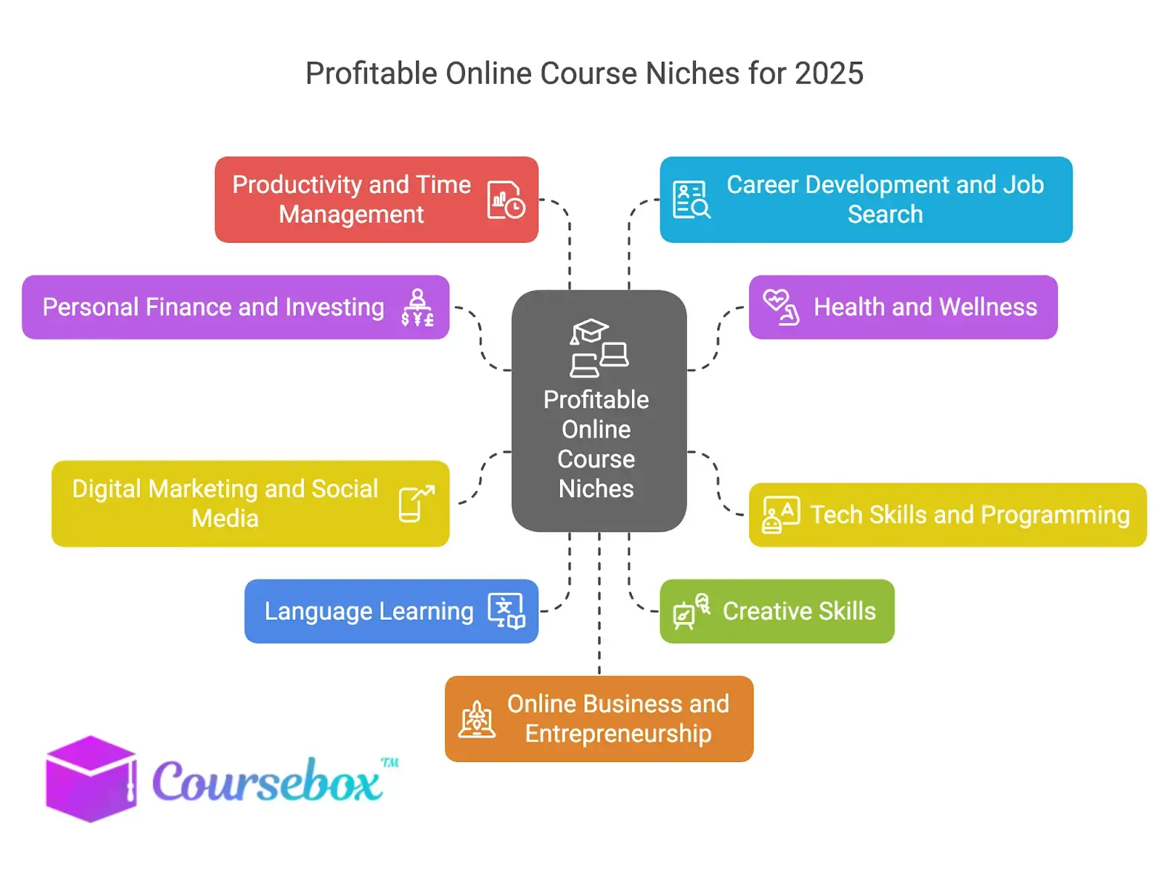
Step 1: Choose a Profitable Topic
Start with demand. Ask yourself:
- What problem can I solve?
- What skill can I teach clearly?
- What result can I promise?
Search forums, social media, or marketplaces. Look for repeated questions because repeated problems mean strong demand. If people already pay to solve that issue, your topic has potential.
Step 2: Validate Before Building
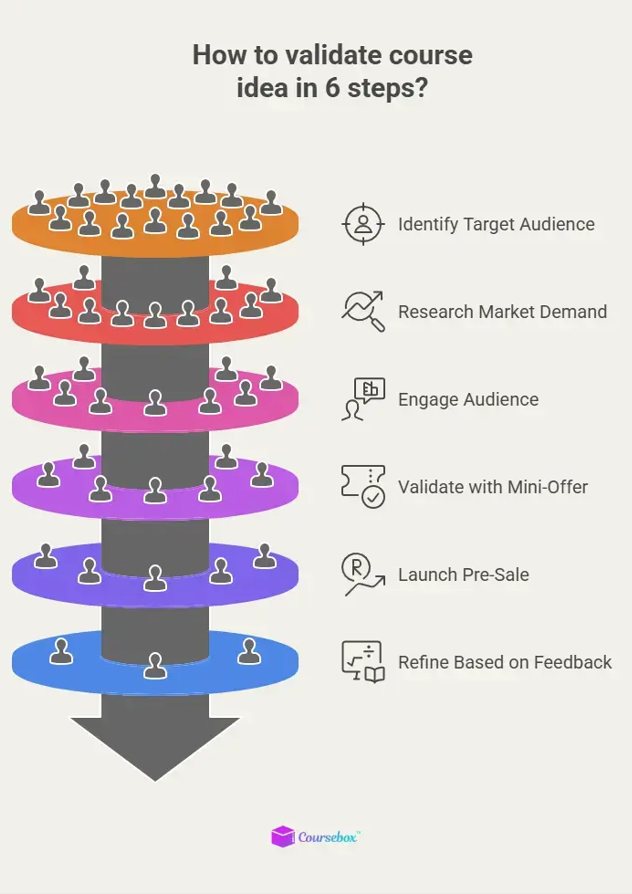
Before building everything, test interest. You can:
- Post a poll
- Share a waitlist form
- Offer a free mini-lesson
- Ask your audience directly
This reduces risk. It also helps shape your final curriculum around real needs.
Step 3: Use a Free Course Creation Tool
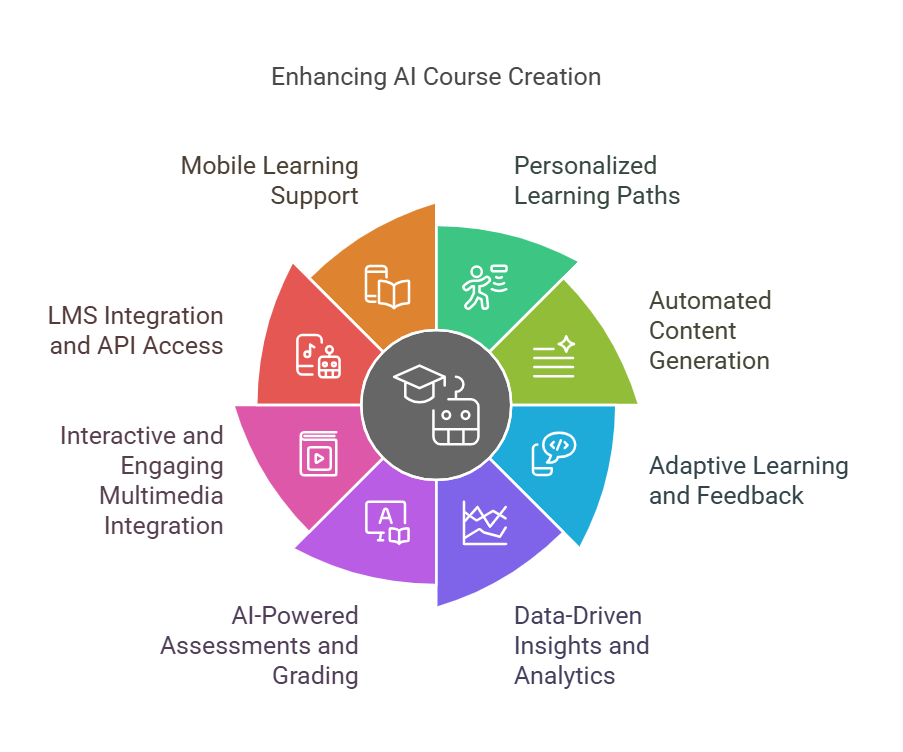
Now it’s time to build. Several platforms allow you to create a course for free before upgrading. Look for tools that offer:
- AI outline generation
- Lesson editing
- Quiz creation
- Basic hosting
Some platforms even allow you to upload documents or videos and auto-structure them into modules, which dramatically reduces setup time. This is how many creators now create online courses with AI for free and launch faster than ever.
Step 4: Build a Simple Course Structure
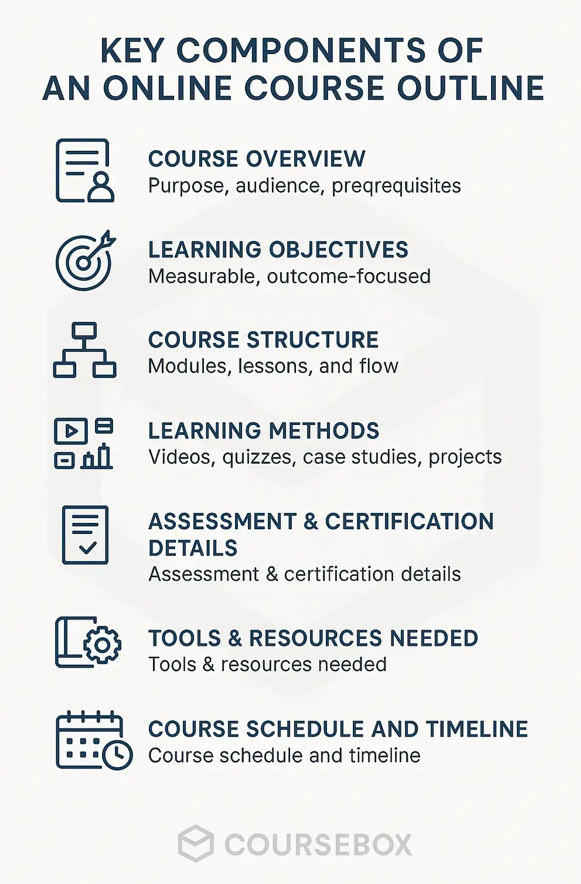
Keep it clean.
- Module 1: Foundation
- Module 2: Core Skill
- Module 3: Application
- Module 4: Advanced Strategy
Do not overcomplicate because shorter, outcome-focused courses often sell better than massive ones.
Step 5: Add Value With Assessments
Even free builders often allow:
- AI-generated quizzes
- Assignments
- Progress tracking
Assessments increase perceived value and improve completion rates. Some modern platforms even provide AI tutors trained on your lesson content, giving students guided support without extra work from you.
Step 6: Create a Basic Sales Page
To create a course to sell, you need:
- Strong headline focused on transformation
- Clear benefits
- Who it is for
- What students will achieve
- Testimonials or proof, if available
Many online course builders include simple landing page templates, which can save you a lot of time. Keep the design simple and focus on results.
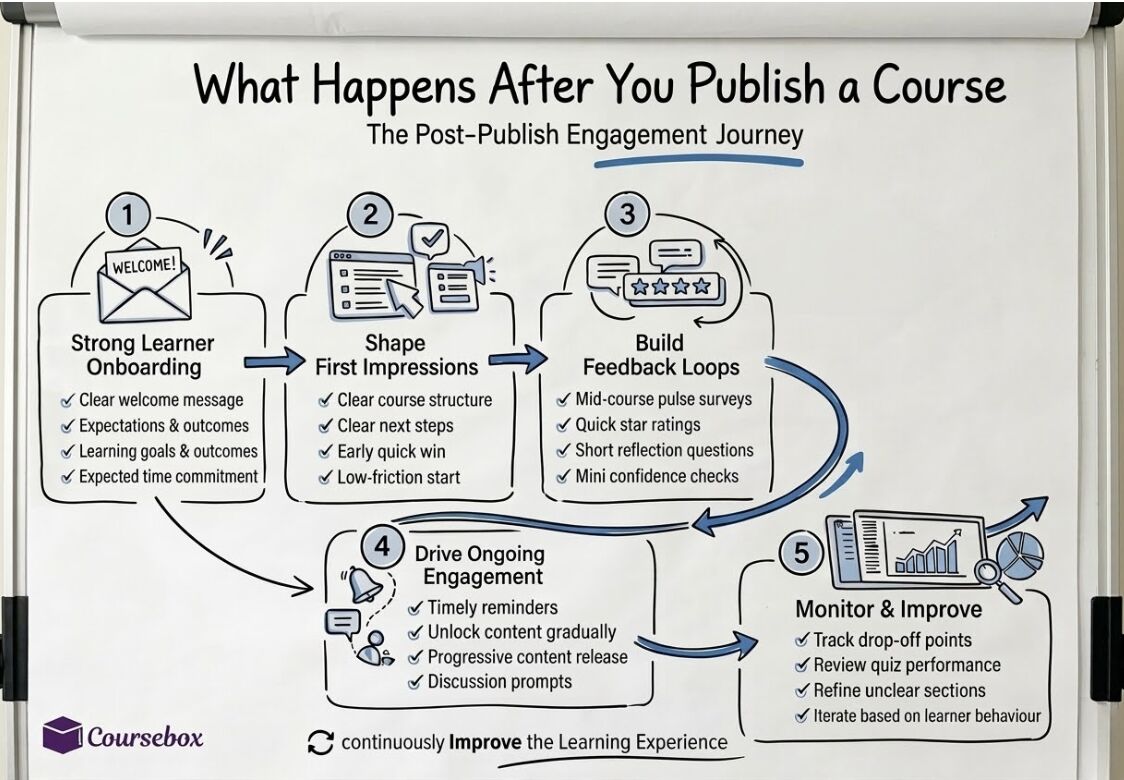
Step 7: Launch and Iterate
Launch with what you have and do not wait for perfection. Additionally, collect feedback and improve lessons as you go. You can add depth later.
Many of the best online course builder platforms allow easy updates without rebuilding everything from scratch. Start free and improve as revenue grows.
10 Best Online Course Builder Options to Explore
Let’s quickly compare a few online course builders to help you choose the right one for your needs.
1. Coursebox AI
Coursebox AI is one of the top tools for creating a digital course with AI. It turns existing files like videos, slides, or documents into structured lessons fast. AI can also build quizzes, rubrics, and interactive elements automatically.
Many users like how intuitive the editor feels and how easy it is to launch courses on web, mobile, or LMS systems. A big plus is the free plan, which lets you start building courses without cost. If you plan to sell your online courses, built-in eCommerce and AI tutors add value as you scale.
Key Features:
- Upload-to-course conversion from docs & videos
- AI quiz and assessment generation
- Interactive learning modules
- Built-in sales and checkout tools
- Free plan to start creating
2. iSpring Cloud AI
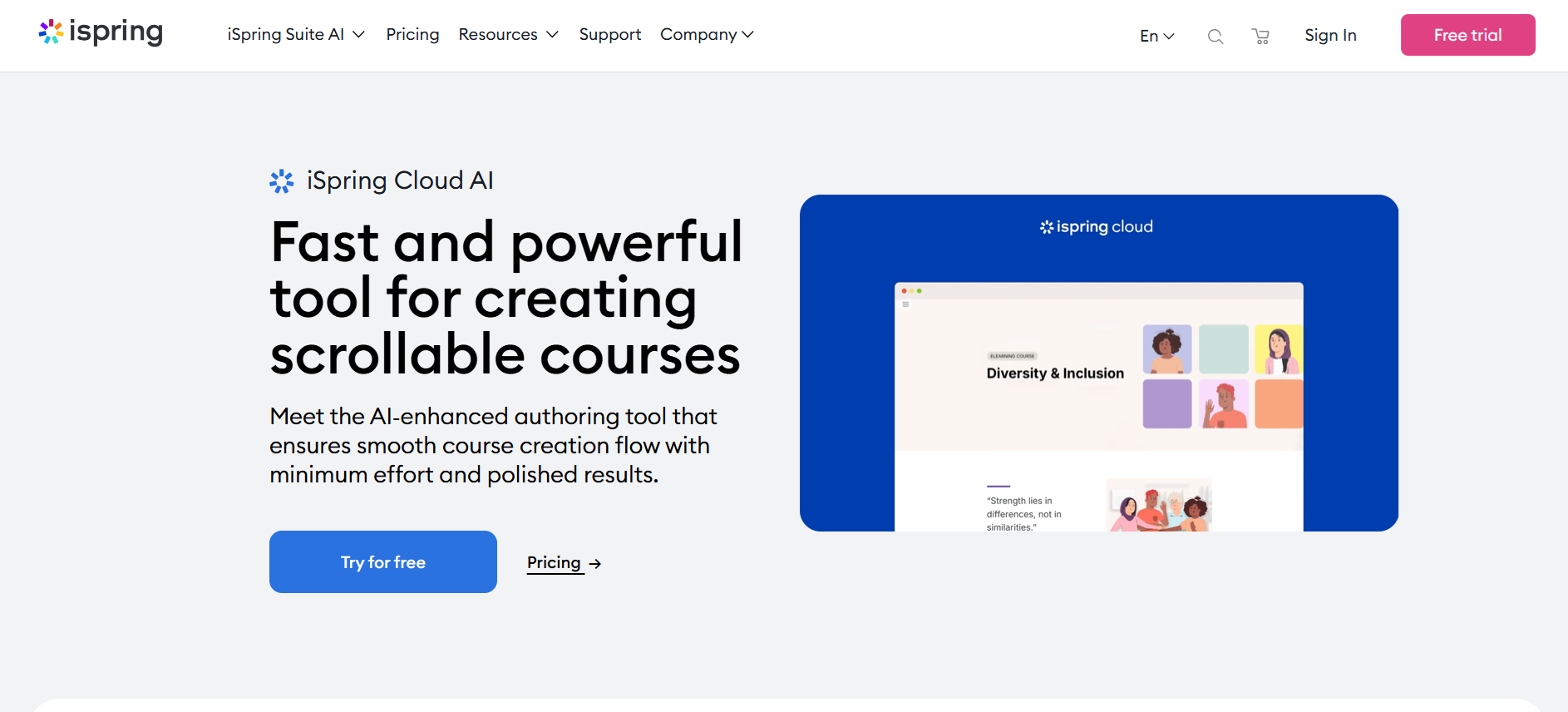
iSpring Cloud AI offers a browser-based editor that helps you build online courses quickly. It uses AI to suggest lesson titles, structure modules, and generate content ideas. Users appreciate how clean the interface feels and how courses look great on mobile devices.
The platform also supports SCORM export, making it suitable for corporate training or LMS integration. One limitation is advanced interactive tools. Those tend to require additional authoring tools. Still, for quick course builds and standard training paths, it’s a reliable builder.
Key Features:
- Browser-based course creation
- AI-powered outline and content suggestions
- Automatic quiz creation
- SCORM export & LMS compatibility
- Mobile-responsive content
3. Thinkific
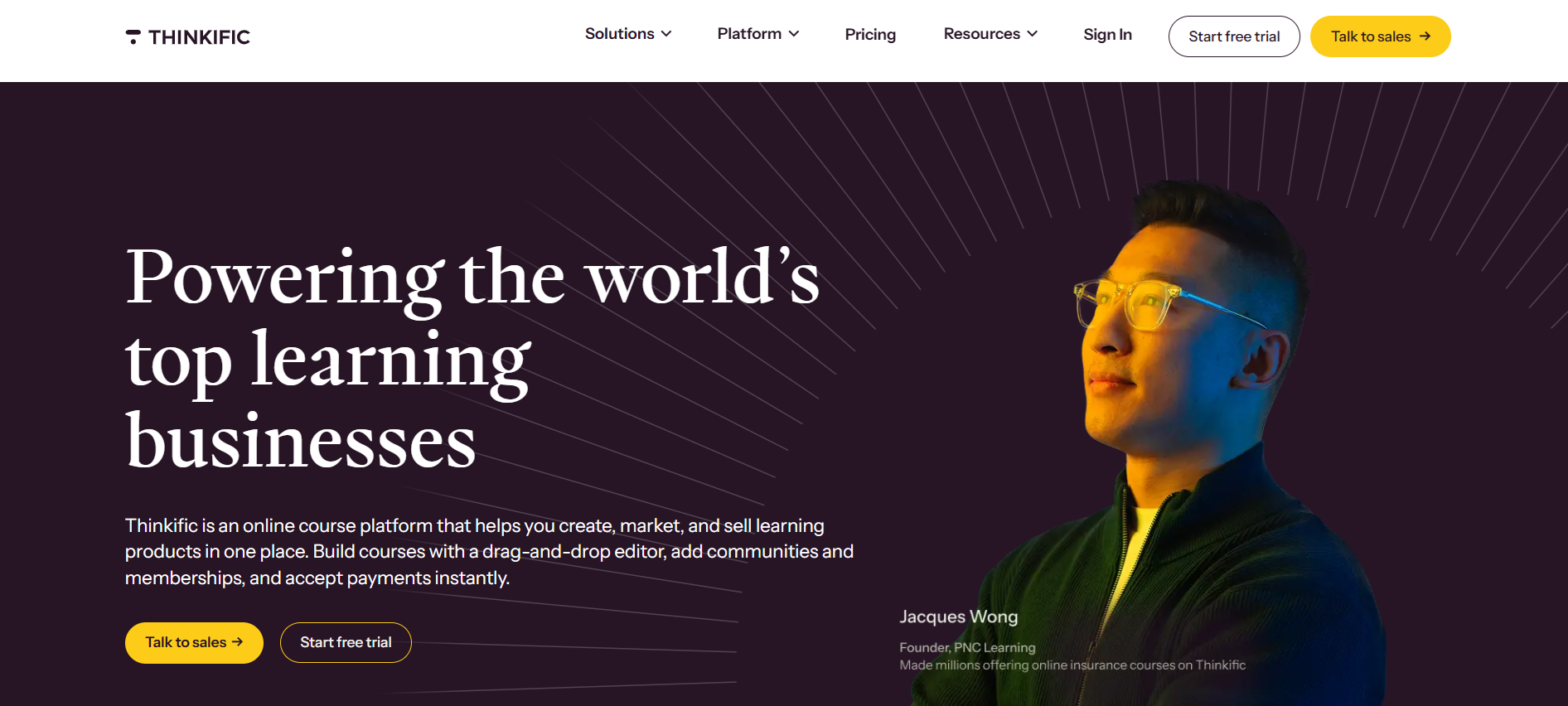
Thinkific is a popular platform for creators who want a complete online course builder with hosting, student management, and sales features.
The drag-and-drop editor makes structuring training modules simple, even for newbies. Many creators like the landing pages, payment processing, and membership tools that come with basic plans.
For deeper eLearning interactivity (like advanced quizzes or adaptive paths), you might need add-ons, but the core experience works well for most course types.
Key Features:
- Drag-and-drop course builder
- Multimedia lesson support
- Landing pages & checkout tools
- Student analytics dashboard
- Membership and subscription options
4. LearnWorlds
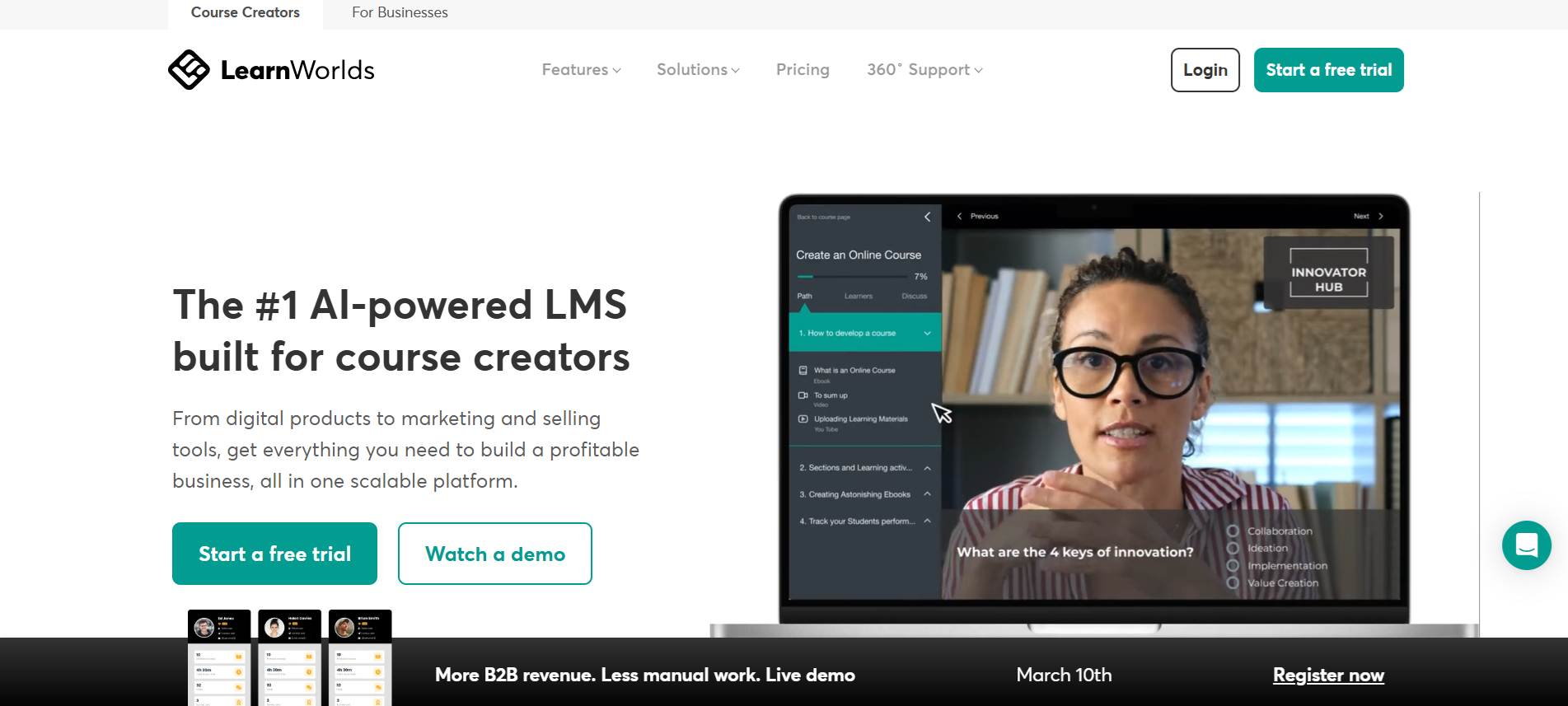
LearnWorlds combines powerful course creation tools with engagement and sales features. The editor supports interactive video, assessments, and surveys, making lessons more immersive. Many educators and entrepreneurs appreciate how the platform also includes website building, mobile app support, and advanced analytics.
LearnWorlds may feel complex at first for beginners, but it shines when courses need deeper interactivity or community features. If selling courses and building branded portals matter, this platform delivers a comprehensive solution.
Key Features:
- Drag-and-drop lesson editor
- Interactive video & assessments
- Website and mobile app builder
- Detailed analytics
- E-commerce and marketing features
5. Paradiso Authoring Tool
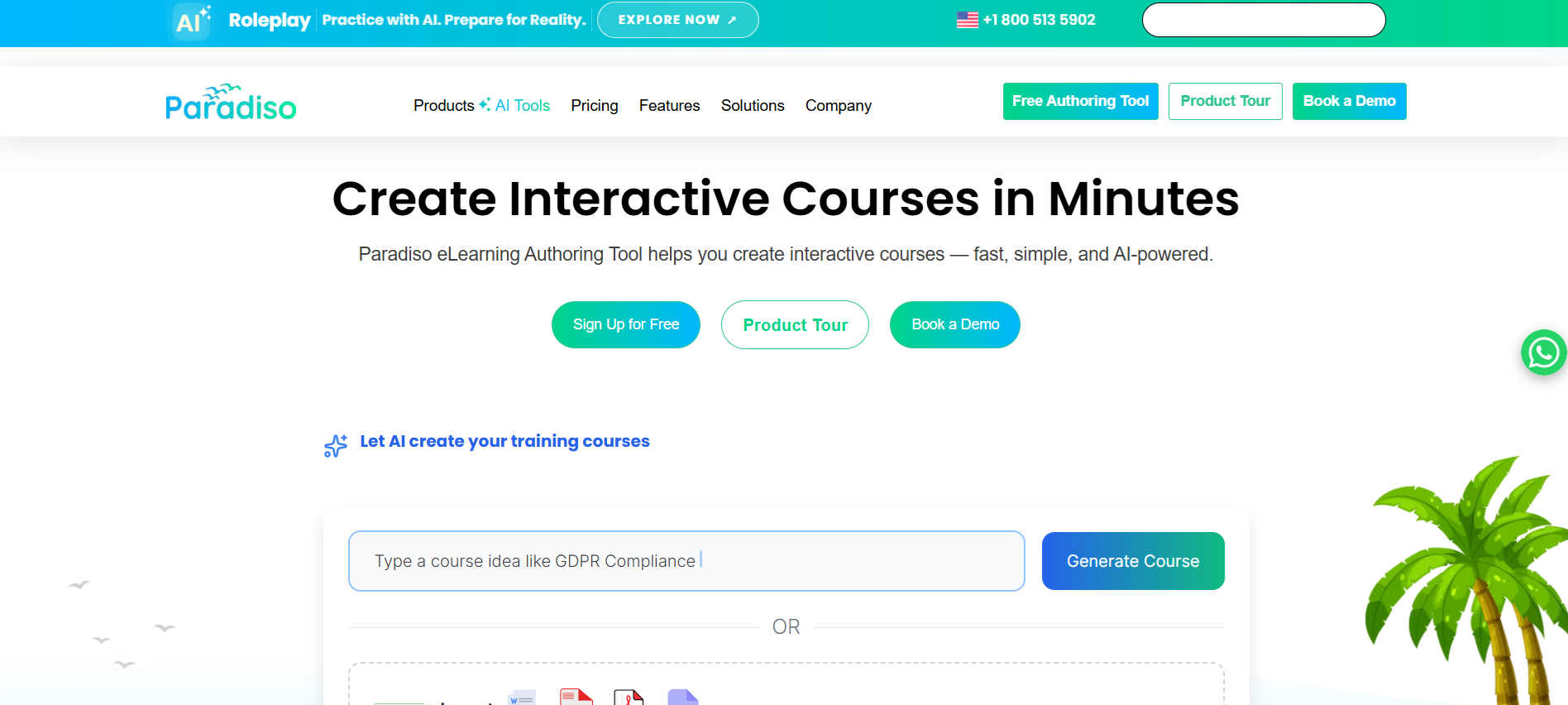
Paradiso offers a full authoring suite for building interactive online courses. The AI features help turn documents and slides into structured lessons with minimal manual input. Users value the drag-and-drop content blocks, voice-over options, and SCORM export for LMS use.
Since it works well in formal training environments, Paradiso fits both education and corporate training needs. On the flip side, some advanced features are available only at higher pricing tiers, which may matter for small creators. Still, it delivers strong content creation capabilities.
Key Features:
- AI-assisted lesson creation
- Drag-and-drop editor
- Voice-over options
- SCORM export & LMS support
- Custom theme settings
6. Heights AI
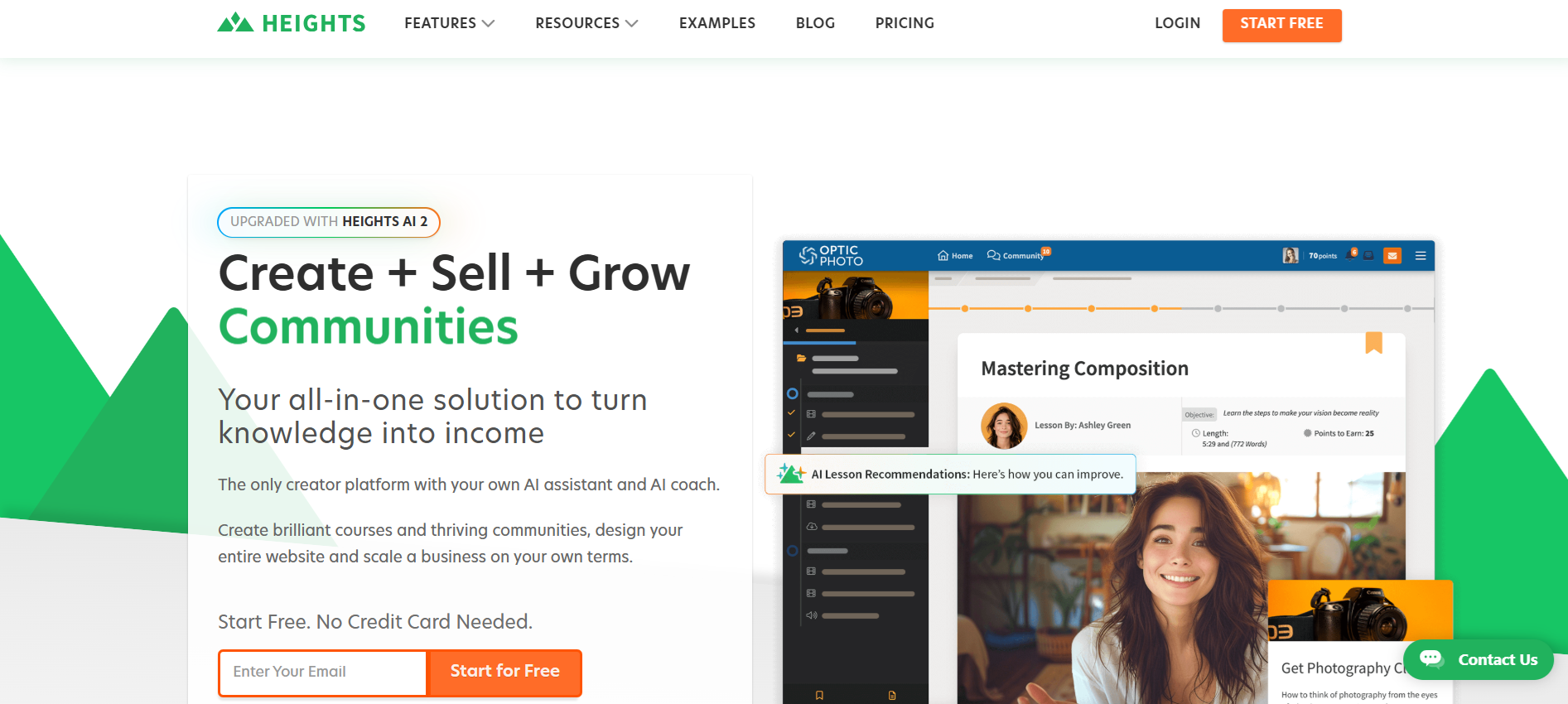
Heights AI focuses on helping creators produce online learning content with speed and simplicity. It uses generative AI to outline lessons, generate quizzes, and suggest activities based on your topic.
Many users appreciate the clean interface and how easy it is to keep course production moving without steep learning curves. Some advanced interactive or community features still lag compared to full LMS platforms, but for simple course creation and fast output, it performs well.
Key Features:
- AI-based course outline generation
- Automated quiz suggestions
- Simple drag-and-drop editor
- Prompt-driven content creation
- Responsive lesson layouts
7. Courseau
Courseau turns existing materials like slide decks, videos, and documents into structured online courses using AI. Creators like how intuitively the tool converts files into learning modules with quizzes, narration, and takeaway summaries. Collaboration features help teams refine lessons together without heavy technical work.
Some users note that design and layout customization may require extra effort compared to other builders, but Courseau’s ability to automate large chunks of the workflow saves hours. For teams and organizations that want to repurpose existing material quickly, it’s a strong choice.
Key Features:
- Upload-to-structured course conversion
- AI-generated quizzes and summaries
- Real-time collaboration tools
- Narration and voice-over support
- Export/embed options
8. Mini Course Generator
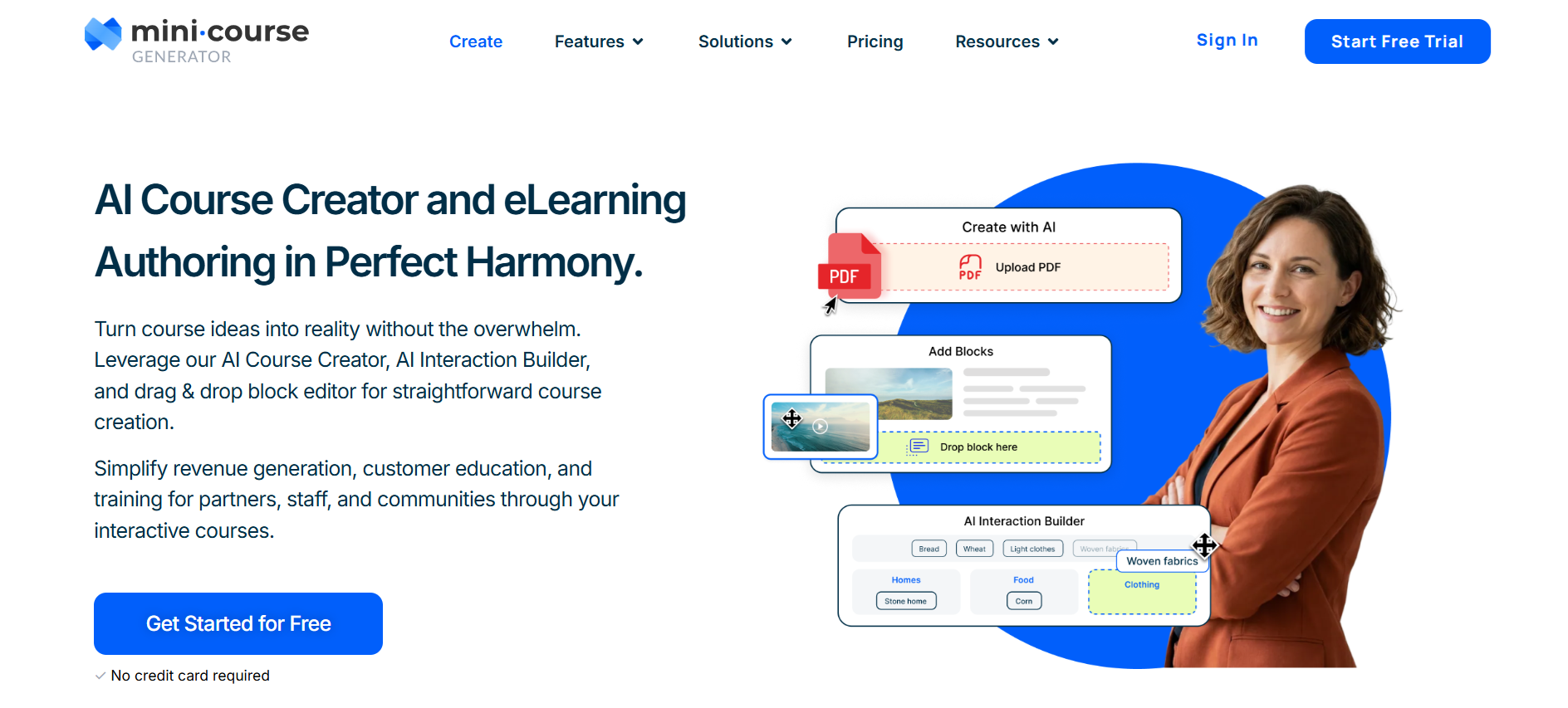
Mini Course Generator focuses on creating short, micro-learning modules quickly. The AI assistant helps generate course outlines, lesson content, and interactive elements based on your input. Users like how quickly they can go from idea to a shareable course, and how uncomplicated the interface feels, even if you’re new to course creation.
Since it emphasizes ease over depth, it may not offer advanced LMS-level analytics or community tools, but that simplicity is ideal for quick launches, lead magnets, or bite-sized training experiences.
Key Features:
- Micro-course creation with AI prompts
- Simple drag-and-drop editor
- Interactive elements (quizzes, polls)
- Quick share/embed options
- Lightweight workflow for rapid publishing
9. Canva (with AI tools)
Canva’s design platform now includes AI tools that help creators build visually rich course materials like slide decks, worksheets, infographics, and social content. While it’s not a traditional course builder, many creators use Canva to design professional lessons that can be integrated into learning platforms.
The AI features can draft outlines, generate text, and suggest imagery, helping you shape polished assets quickly. Canva works best when paired with a learning delivery tool. If design quality and visual branding matter, Canva adds major value to the course creation workflow.
Key Features:
- AI text and image generation
- Professional templates for lessons and collateral
- Drag-and-drop design controls
- Export to PDF, video, or presentation formats
- Brand kit and visual consistency tools
10. Descript
Descript is a media-focused tool that makes creating online course videos and audio content simple. Using AI, it transcribes recordings, removes filler words, and lets you edit multimedia like text. You can then publish lessons as videos, podcast episodes, or interactive modules.
Creators love how fast it makes polishing rough recordings and adding subtitles or highlights. Descript pairs well with course builders since it focuses on the media part of your content. If your course strategy depends on high-quality video or audio lessons, it’s a powerful tool to include in your stack.
Key Features:
- AI transcription and editing
- Overdub voice cloning
- Remove filler words automatically
- Export to multiple media formats
- Screen recording for lesson creation
Create an Online Course Free of Charge Today!
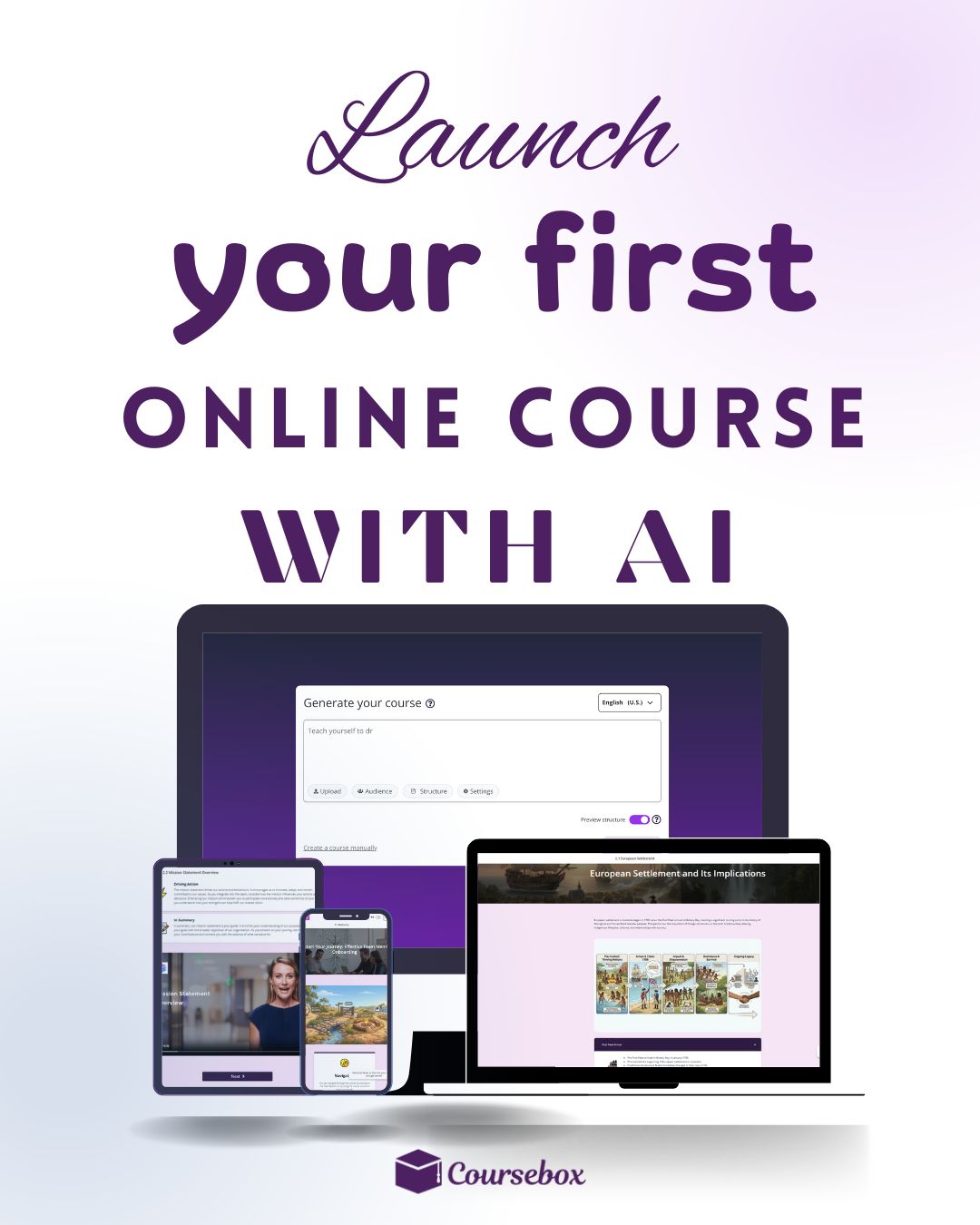
Launching a course does not need to be expensive or complicated. Tools like iSpring Cloud AI, Thinkific, LearnWorlds, and Paradiso Authoring Tool make it easier than ever to design lessons, quizzes, and interactive modules.
For creators who want speed, AI-assisted features, and a fully free starting plan, Coursebox AI stands out. You can upload materials, generate structured lessons, and even build quizzes and interactive elements at no cost.
Start experimenting today, refine your content, and see how AI transforms course creation. With the right tools, building professional, learner-focused courses has never been simpler.
FAQs
Frequently Asked Questions
Start by defining a clear outcome for your learners. Then outline lessons, modules, and assessments. Tools like Coursebox AI can help generate course structures automatically, add quizzes, and even create interactive elements. Upload your materials, refine lessons, and choose a platform to deliver your course online, whether on the web, mobile, or an LMS.
You can start without spending a dime. Platforms like Coursebox AI, Mini Course Generator, and Thinkific let you create online courses free of charge, including lesson structuring, AI-assisted outlines, and basic quizzes. Free plans give you a chance to experiment, refine your content, and even deliver a polished course before upgrading to advanced features.
Yes. AI can generate course outlines, lessons, quizzes, and summaries in minutes. Using a platform like Coursebox AI, you can create an online course with AI free, automatically structure modules, and even add interactive elements like assessments or AI tutors. Human review ensures accuracy and engagement while AI speeds up production.
In iSpring Cloud AI, start by uploading your content or typing your course topics. Use AI features to generate structured lesson plans, quizzes, and learning objectives. Add multimedia, interactive exercises, and finalize the course for SCORM export or LMS integration. For a more AI-assisted workflow, you could complement iSpring with a tool like Coursebox AI to streamline content generation.
Focus on a topic with clear demand and outcomes. Structure lessons, add assessments, and polish your content. Use platforms with built-in landing pages, payment options, and subscriptions. Tools like Coursebox AI help create structured lessons and interactive quizzes quickly, so you can launch and sell your course faster while maintaining professional quality.
Canva helps design visually rich course materials like slides, worksheets, and infographics. Use AI text and image features to speed up content creation. Once your materials are ready, upload them to a course platform like Coursebox AI or Thinkific to structure modules, add quizzes, and deliver the full course. Canva works best as a design companion while a course builder handles the lesson flow and student experience.
Alex Hey
Digital marketing manager and growth expert

